Treatment Care Guide — Legendary Smiles — Reno, NV

We look forward to connecting with you. Please fill out the form below and we will reach out as soon as possible. Thank you!

Skip to main content

Treatment Care Guide

We have comprehensive guides for all of our treatments.
If you're currently in treatment or want to learn more about a treatment recommendation, review our guides.

Aligners 101

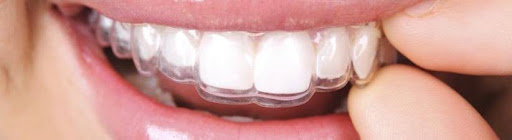
ALIGNERS DON’T WORK IF YOU DON’T WEAR THEM:  Wearing aligners well is the secret to success.  Aligners should be worn for 22 hours a day. It is critical to wear aligners at work, school, and during all social activities.  Aligners should only be removed for eating, brushing and flossing your teeth. Change them once a week unless otherwise directed by the doctor.

APPOINTMENTS:  It’s critical that you show up to every recheck appointment so that we can carefully monitor how well your teeth are tracking with the aligners and make modifications as needed. The Doctors spend a lot of time creating the ideal sequence of movements to precisely align your teeth. If any teeth are not moving ideally, early detection and correction is important to help make adjustments and keep treatment time as short as possible.

BRUSH YOUR TEETH 3 TIMES A DAY:  Ideally, brush your teeth three (3) times a day after you eat. If you can’t brush after a meal, at least rinse with water vigorously and then replace your aligners.  Remember to also brush or rinse your aligners nightly to remove any debris that accumulated during the day.  Dental cleanings are still recommended and can be done during treatment.

EATING/DRINKING:  Normally you do not want to eat/drink with aligners in so food/drink doesn’t get trapped within the aligners for long periods of time against your teeth.  An occasional light snack or drink is okay to have with aligners in as long as you rinse with water afterwards.  Drinking coffee with aligners in is okay but frequent coffee may cause staining of the aligners and attachments.

ACHINESS: There may be a dull, achy sensation after placing your aligners initially as well as after each new set, but usually is very minimal due to the slight, incremental movements planned. You can take Advil or Tylenol, or whatever you normally take for a headache or muscle aches to relieve this discomfort.  We recommend changing aligners before bedtime to improve comfort.

BREAKAGE/LOSS:  If you break or lose an aligner, please call the office.  We will most likely have you move forward to the next aligner.  

REFINEMENTS:  The Doctors at Legendary Smiles are very particular about having the best finish possible. Although the teeth may look good after the first set of aligners, additional stages of aligners (refinements) are required to make finishing adjustments to the teeth and bite. These additional stages are included in your overall treatment time and cost. Refinement stages often require changing or adding attachments and are generally fewer aligners than the initial stage.

ATTACHMENTS:  The clear bumps on some of your teeth are necessary for the aligner to fit more tightly and to allow more complicated movements of the teeth.  If one comes off, please notify our office, but it usually isn’t urgent. 

ELASTICS:  Rubber bands are sometimes worn with your aligners to help accompany certain movements.  Use as directed from your technician.  Getting used to placing the elastics can sometimes be difficult, but don’t get frustrated as it usually takes most people a few days to get the hang of them.  Some people prefer to put them on outside the mouth and insert the trays and elastics as one unit. 
Eating with Braces - What foods are safe?

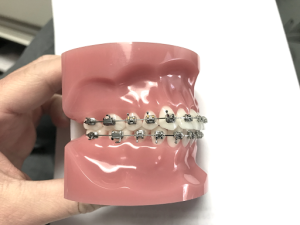
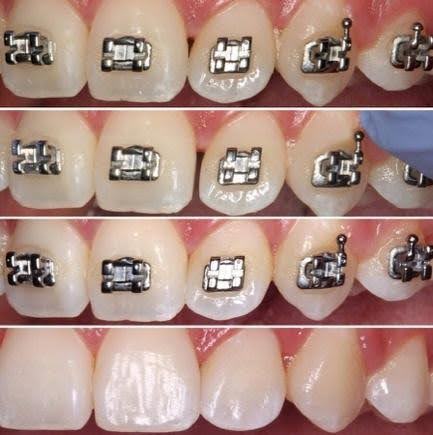
Our goal is to provide you with a beautiful smile.  This can best be accomplished if your braces stay attached to your teeth.  You need to be careful about what kinds of foods you eat, as some hard or sticky foods can be trouble.

FOODS YOU MUST AVOID

Sticky – Chewy

  • Sugary Gum (Sugarless is OK)
  • Caramel and Caramel apples
  • Tootsie Rolls and Pops
  • Gummy Bears and Worms
  • Starburst, Skittles
  • Now and Laters

Hard – Crunchy

  • Nuts (Food and candy with nuts)
  • Corn Nuts, Popcorn
  • Hard Candy – Jolly Ranchers, 
  • Lifesavers, Suckers, Jaw Breakers
  • Beef Jerky 
  • Ice

FOODS TO BE CAREFUL OF

  • Whole crispy fruits & vegetable (cut into small bite size pieces)
  • Hard, crusty breads, pizza crust (tear into small bite size pieces)
    Corn chips and potato chips (break into bite size pieces)
    Fresh corn on the cob (cut corn from cob to eat)
  • Sugary drinks or sodas (limit to special occasions only)
  • Meat on the bone (cut meat off the bone into small pieces)

For most situations, common sense will tell you what to stay away from. Hard foods can break or damage wires and brackets. Sticky foods can get caught between brackets and wires and pull off appliances. Sugary foods cause tooth decay and related problems. Damage to braces may result in treatment taking longer to complete. 

Elastics Instructions

Elastics are an important part of your orthodontic treatment. They supply the pressure needed to mover your teeth and jaws into the correct bite alignment. To achieve the desired results, you must follow the instructions given you regarding their placement and use. Any time missed wearing your elastics will make your treatment take longer!

  • You are responsible for placing the elastics on your  braces between appointments. Remove them only when you brush and eat, then replace them immediately.
  • Change your elastics often (usually 4 or more times per day).
  • Elastics should be worn 24/7 unless otherwise directed.

Some things to keep in mind

The elastics may cause your teeth to be sore at first. This is because your teeth are moving (which is a good thing!). The soreness only lasts a few days with perfect elastic wear. If you don’t wear them how you are supposed to, the soreness will last longer.

Schwartz Appliance

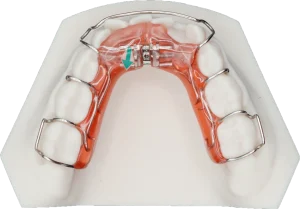
What does the Schwartz appliance do?

  1. Widen/upright the lower teeth to make more space for crowded teeth
  2. Align the lower front teeth by using the ‘sweep springs’. 

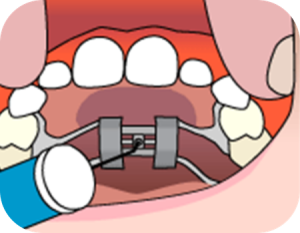
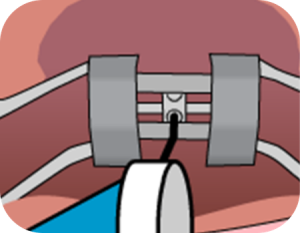
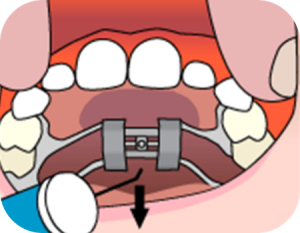
The appliance is removed and the expansion screw is activated by the patient (or parent) on a schedule set by the doctor, usually 1 turn per week. Activation consists of turning the expansion screw with a key that is provided with the appliance.

How long will I have to wear the Schwartz?

The Schwartz is used actively until the desired width is reached and is then used as a retainer until the patient is ready for the second stage of treatment (usually until all the baby teeth have been lost).

How do I clean my Schwartz?

To clean your appliance, remove it from your mouth when you brush and brush it with a small amount of tooth paste.

Some things to keep in mind

Do not ‘flick’ your appliance in and out of your mouth. Repeated flicking will weaken the wires and cause them to eventually break. If at some point your appliance feels like it fits differently, don’t stop wearing it. Continue to wear it (unless it’s causing you pain) and call as soon as possible for an appointment to get it adjusted.

Reverse Headgear

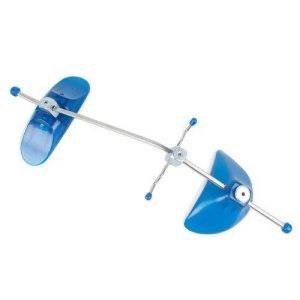
The reverse headgear is a very important part of your orthodontic treatment. A reverse headgear will help to move your upper jaw forward with growth, which is critical to do at a young age because it reduces or possibly eliminates the need for very involved jaw surgery later in life. This treatment is to be taken very seriously and followed precisely if an acceptable result is to be achieved.

What to Expect:

  • The headgear attaches to the appliance in your mouth teeth with elastics. Your teeth will likely feel sore or tender for a few days.
  • Sleeping will be different at first until you get used to sleeping with the headgear on your face.
  • If the appliance which the headgear attaches to becomes loose, then discontinue the reverse pull headgear and call our office for an appointment. 

How long will I have to wear my headgear?

The headgear is worn until the bite is corrected. Depending on the age of the patient, how well they wear the headgear, and how much correction the bite needs will determine how long you have to wear it. Generally, headgear is worn anywhere between 6-12 months.

Interproximal Reduction (IPR)

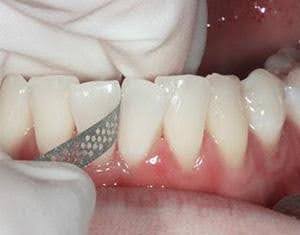
Interproximal reduction (IPR), also called slenderizing, or tooth stripping, is the removal of small amounts of outer enamel between two adjacent teeth. This is commonly used to: 

  • create space for crowded teeth when expansion alone is insufficient and removal of adult teeth is not recommended
  • reshape teeth to fit better with the opposing arch
  • reduce black triangle spaces between the tooth contacts and gums 

Interproximal reduction is performed by hand, using thin flexible diamond-coated strips worked back and forth between the teeth, or with a thin rotary disk on a dental handpiece. The doctors will only remove the minimal amount of enamel required to get your teeth straight. 

Will IPR hurt or damage my teeth?

IPR is painless on the teeth and doesn’t require any dental anesthesia. This procedure has been performed regularly for patients in Invisalign or braces over the last 50 years, and studies show that IPR does not make teeth more susceptible to tooth decay, nor does the procedure predispose gums to gum disease. Because only a very small amount of enamel is removed, patients report no increase in tooth sensitivity. 

Will I notice spaces between my teeth?

After your interproximal reduction is performed you may notice small gaps between your teeth. Your new spaces will not, however, be nearly as apparent to others. These spaces generally close very quickly as your treatment progresses.

Lingual Arch

What does the Lingual Arch do?

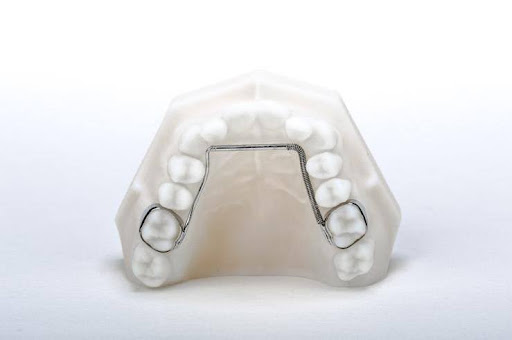
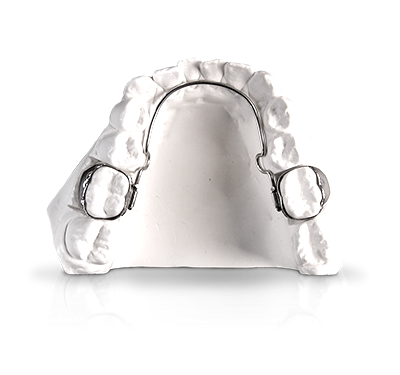
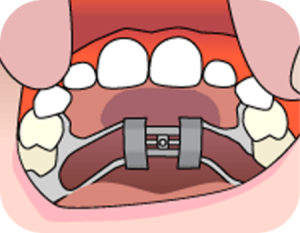
A Lingual Arch is a permanent appliance that is anchored by bands on the first molars. The inside bar of the appliance is removable and adjustable by the doctor. The purpose of the lingual arch is to hold the teeth where they are until all the permanent teeth come in.

How long will my Lingual Arch stay in?

On average, the lingual arch acts as a retainer until you are ready for the second stage of treatment, usually after all the baby teeth are lost.

How do I clean around my E-Arch?

Brush around the metal bar of the appliance and the bands on the back molars with a toothbrush twice per day. Use a floss threader to get your floss under the inside bar and then slide it tooth to tooth.

Some things to keep in mind

Do not ‘flick’ your Lingual Arch! This habit can lead to breakage of the inside bar of the appliance. If this happens, give us a call to schedule an appointment to get the Lingual Arch fixed.

Elastics

Elastics are an important part of your orthodontic treatment. They supply the pressure needed to mover your teeth and jaws into the correct bite alignment. To achieve the desired results, you must follow the instructions given you regarding their placement and use. Any time missed wearing your elastics will make your treatment take longer!

  • You are responsible for placing the elastics on your braces between appointments. Remove them only when you brush and eat, then replace them immediately.
  • Change your elastics often (usually 4 or more times per day).
  • Elastics should be worn 24/7 unless otherwise directed.

Some things to keep in mind

The elastics may cause your teeth to be sore at first. This is because your teeth are moving (which is a good thing!). The soreness only lasts a few days with perfect elastic wear. If you don’t wear them how you are supposed to, the soreness will last longer.

Retainer Care

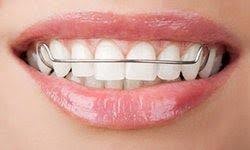
Retainers are a very important part of your orthodontic treatment. Without proper retainer wear, each tooth is at risk for relapsing into its original position. Follow these tips to care for your retainers and make sure your teeth stay perfectly straight! 

  • Retainers are worn full-time for the first month after braces or Invisalign removal and then nightly thereafter for as long as you want your teeth to remain straight – forever!
  • Clean your retainer at least once a day by brushing them with your toothbrush and warm water. Brushing the retainer will remove food, plaque, bacteria and help eliminate odors. Cleaning tablets like Retainer Bright ® or Polydent ® can be also be used to remove buildup and keep them looking and smelling fresh
  • ALWAYS place retainers in the retainer case when they are not in your mouth. If you place your retainer in a napkin or your pocket without the case, they will be easily lost or broken
  • Dogs love retainers. It only takes a few seconds for a dog to destroy a retainer. They will even chew through retainer cases to get to them. Make sure you store retainers in a place where dogs can’t reach them
  • Your speech may be altered as you first get used to your retainers. You may slur some words for the first few hours or few days. The more you speak the faster your tongue will adapt to the retainers
  • Retainers are breakable. Dropping them, stepping on them, throwing them or excessive playing with them can cause them to crack or break
  • Always bring your retainers to your appointments so we can check how they fit. 
  • If your retainers are difficult to get in and out, it most likely means that you need to wear them more! As you wear them more, they will gradually go in and out more easily.
  • If your retainers are lost, stolen or broken, call the office immediately. Any time without your retainer is time that your teeth are moving. Even though it costs to replace retainers, it’s still cheaper and easier than allowing your teeth to shift and needing to re-straighten them.
  • Your first set of clear retainers is included as part of your initial orthodontic fee. The fee for replacing a lost or broken retainer ranges from $200-$300 per retainer ($400-$600 per set) depending on the type of retainer needed. If properly cared for, retainers can last for years.

Quad Helix

What does the Quad Helix do?

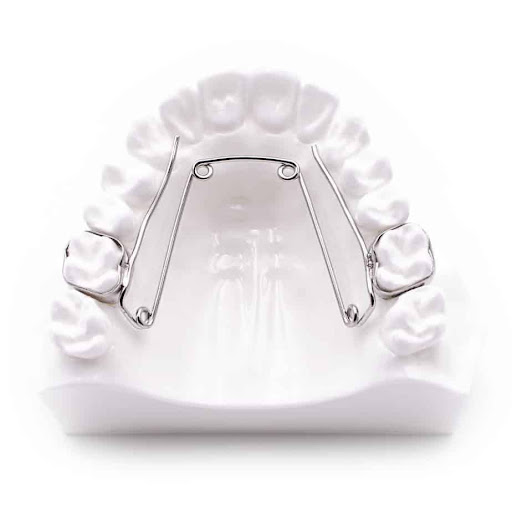
There are many reasons we use a Quad Helix:

  1. To correct a crossbite
  2. To widen the palate/upper arch to make more space for crowded teeth
  3. To provide anchorage for the back teeth and hold space
  4. To widen the canines and bicuspid teeth to create a ‘broad’ smile.

How long will my Quad Helix stay in?

On average, the Quad Helix stays in for about 18 months, but the length of time varies from patient to patient based on their needs. The active expansion normally happens in the first 3-6 months, but if the expander is removed too quickly the arch will relapse back into its original position. To ensure long-term stability, the Quad Helix needs to stay in as a retainer until the doctor is comfortable that the arch width is stable, sometimes until all the remaining baby teeth are lost.

Some things to keep in mind

Occasionally your tongue may start to show an impression of your Quad Helix. This is caused by tongue pressure when you swallow or when you are sleeping. If this makes your tongue sore, rinse with warm salt water a few times a day for a day or two and try to avoid pushing against the Quad Helix. If the Quad Helix starts to press against the roof of your mouth or hangs down too far, call the office to make an appointment to get it adjusted.

Quad Helix with Sweep Springs

Sweep springs are extensions on the Quad Helix used to align the front teeth or to correct a crossbite of the front teeth. These extension can often be removed once the alignment is achieved. 

Quad Helix with a Reminder

A reminder is made for those patients who have a tongue, thumb or finger habit. The reminder is an extra set of loops that are added to the Quad Helix. The reminder is placed to prevent the thumb or fingers from being able to fit comfortably in the mouth and to guide the tongue into its proper positions when swallowing.

E-Arch Expander

What does the E-Arch do?

The E-Arch is designed to help relieve crowding in the lower arch. The bands around the first molars anchor the appliance while the two inside arms are connected by an activating spring that releases gradual pressure to widen the lower arch.

How long will I have my E-Arch?

The E-Arch typically stays in for 4-8 months. After the doctor is happy with the amount of expansion, the E-Arch will be removed and a lower holding arch (similar to the E-Arch but without a spring) will be placed to maintain the expansion. The lower holding arch often stays in until all the baby teeth are lost. 

How do I clean around my E-Arch?

Brush around the metal bar of the appliance and the bands on the back molars with a toothbrush twice per day. Use a floss threader to get your floss under the inside bar and then slide it tooth to tooth.

Some things to keep in mind

Do not ‘flick’ your E-Arch! This habit can lead to breakage of the inside bar of the appliance. If this happens, give us a call to schedule an appointment to get the E-Arch fixed.

Forsus Springs

What do the Forsus Springs do?

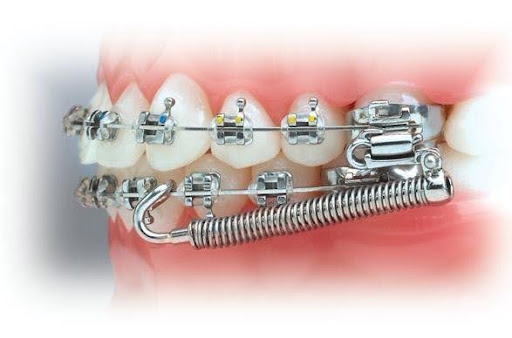
Forsus springs are used to correct overjet by encouraging forward movement of the lower teeth and backward movement of the upper teeth. These springs are used in conjunction with braces and are worn for 4-6 months. In some cases, this may help reduce the need for you to wear headgear, elastics, or have extractions of permanent teeth. 

The Forsus springs work around the clock, using continuous gentle forces to provide as efficient a treatment time as possible. Unlike rubber bands or headgear, you do not have to remember to wear them.

Getting used to them

The springs will likely be irritating for the first week or so. An adjustment period is needed to get used to eating with the springs in. The insides of your cheeks may become irritated as you adjust to your springs.

Some things to keep in mind

Broken brackets and emergency appointments may be more frequent with the Forsus appliance. Avoid yawning and opening really wide to minimize breakage or disengagement of the springs. Do not chew on or play with the springs. They can break. If one of the springs comes loose or falls out, please keep it and call our office to schedule an appointment to get it fixed.